+30.2310498305

Research Areas
Research areas
Technologies for the production of clean conventional fuels
R&D on the production of clean conventinal fuels
Future of Catalytic Cracking
Olefins production and maximization
Refining catalyst poisoning and deactivation
In-situ reduction of S in FCC gasoline
Slurry technologies for heavy fuels upgrading
Modeling of refining processes
Fuel aging studies
Mechanistic studies on fluid catalytic cracking using ZSM-5 catalysts
Production of reformulated fuels from conventional refinery processes (fluid catalytic cracking-FCC, Hydrocracking-HDC, Hydrodesulfurization-HDS, Isomerization, Alkylation, Reforming)
Major accomplishments
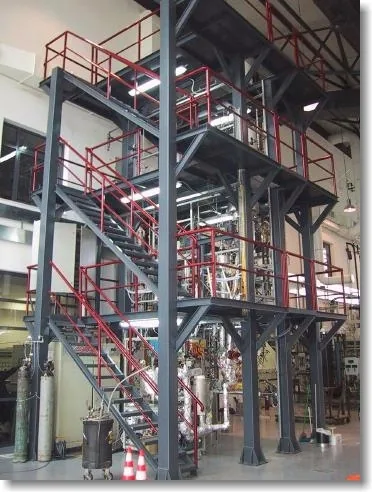
Construction and operation of unique infrastructure (from micro- to pilot scale) for all refining processes.
Technology development for deactivation and evaluation of FCC catalysts and FCC catalytic additives.
Development of new catalysts for hydroisomerization of high molecular weight hydrocarbons (C6-C16).
Development of a breakthrough technology (GASOLFIN™) for propylene production from naphtha streams in partnership with InovaCat company.
Development of a FCC process model for optimization of commercial FCC units.
Development of a new continuous slurry reactor technology for resid hydrocracking.
Technology for co-processing fuels and biofuels in conventional refinery units.
Development of advanced characterization techniques of heavy petroleum fractions (2DGC-TOFMS).
Research areas
Technologies for the production of renewable fuels and chemicals
R&D on renewable fuels and chemicals
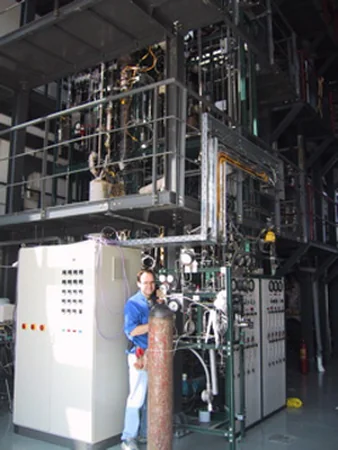
Technology development for biomass flash thermal and catalytic pyrolysis in Fluid bed and Circulating Fluid Bed reactors (for both insitu and exsitu nodes)
Valorization of lignin, plastics and other waste streams via catalytic pyrolysis
Catalytic upgrading of low quality bio-based liquids (biooils, HtL oils, F-T waxes, vegetable oils) using refinery processes (Hydrotreating, Hydrocracking, FCC, Isomerization)
Hydrodeoxygenation of vegetable oils and used cooking oils for green diesel production
Production of high added value biochemicals (5-HMF, Diols, Isoprene, Glucaric acid, Phenols, aromatics etc.) from platform chemicals via chemocatalytic reactions
Slow pyrolysis/torrefaction for production of activated carbon
Development of analytical methods based on 2DGC-TOFMS for the advanced characterization of bio-based liquids
New biomass pretreatment technologies (organosolv, steam explosion, combination of organosolv/explosion)
CO2/CO catalytic hydrogenation to renewable fuels and chemicals via novel process concepts
Chemical looping combustion for clean energy applications
Biofuel aging studies
Major accomplishments
Development of a circulated fluid bed pilot plant reactor for catalytic fast pyrolysis (CFP) of biomass to liquids of improved quality
Production of bio-oil with less than 18wt% O2 at 23wt% organics yield using a new two stage pilot scale cascade process for biomass catalytic pyrolysis
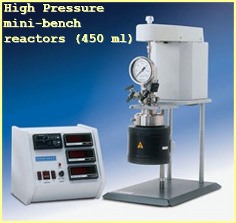
Co-processing of vegetable oils with gas oil on a pilot scale hydrotreating unit
Successful co-processing of bio-oils in the FCC process on pilot scale
Development of high performance Cu-based catalysts for CO hydrogenation to higher alcohols
Continuous catalytic process of isomerization of glucose to fructose with novel catalyst

Research areas
Low emissions environmental Technologies (DeSOx/DeNOx)
R&D on renewable fuels and chemicals
NOx Removal from O2-Rich Streams in stationary and mobile applications – SCR with hydrocarbons (HC-SCR)
Advanced DeSOx and DeNOx technologies for marine engines
N2O abatement from stationary flue gases (O2-Rich Streams): N2O decomposition or SCR with hydrocarbons
Catalytic abatement of CO and CH4 from incomplete combustion processes
Simultaneous NOx reduction & CO oxidation in the flue gases of the FCC regenerator
DeSOx catalytic systems for full and partial burn FCC regenerators
Major accomplishments
Synthesis, production and commercial application of a new additive which significantly reduces the NOx from FCCU regenerator
New noble metal (Rh or Pt) catalyst which exhibits significant NO reduction in the presence of SO2 for the HC-SCR NOx reduction from effluent gases of industrial plants
Noble metal (Pt, Pd, Ir)/g-Al2O3 catalysts for the H2-assisted HC-SCR of NOx
Fundamental understanding of the nature of active sites and mechanism of HC-SCR of N2O/NOx
Research areas
Synthesis and Characterization of new catalytic materials
R&D on New Catalytic Materials
Novel synthesis routes for the preparation of advanced nanostructured catalytic materials
Controlled templated sol-gel methods to tailor porosity and morphology
Controlled deposition of active metals/oxides by applying advanced liquid chemistry and thermal processing for better dispersion and stability
Advanced Flame Spray Pyrolysis (FSP) technology (in collaboration with University of Ioannina)
Synthesis of mesoporous zeolites with varying pore shape and size with acid and base posttreatment
Synthesis of mesoporous aluminosilicates from zeolite seeds
Utilization of natural Greek minerals for the production of nanosized catalysts via chemical and physical transformations
Development of advanced FT-IR methods for quantification of Brønsted and Lewis acidity
Major accomplishments
Highly selective Pt- and Ni-based isomerization catalysts supported on hybrid zeolitic and silicalite structures with fine-tuned metal/acid sites ratio
Carbide and phosphide-based Mo and Ni catalysts for HDO and CO2 valorization routes
A new reusable MgO catalyst derived from minerals for the isomerization of glucose to fructose
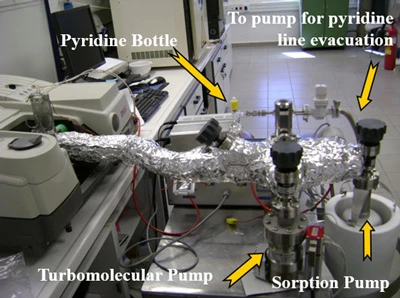
FTIR/pyridine adsorption technique for in depth characterization of catalyst acidic properties